Stage 01 / 04
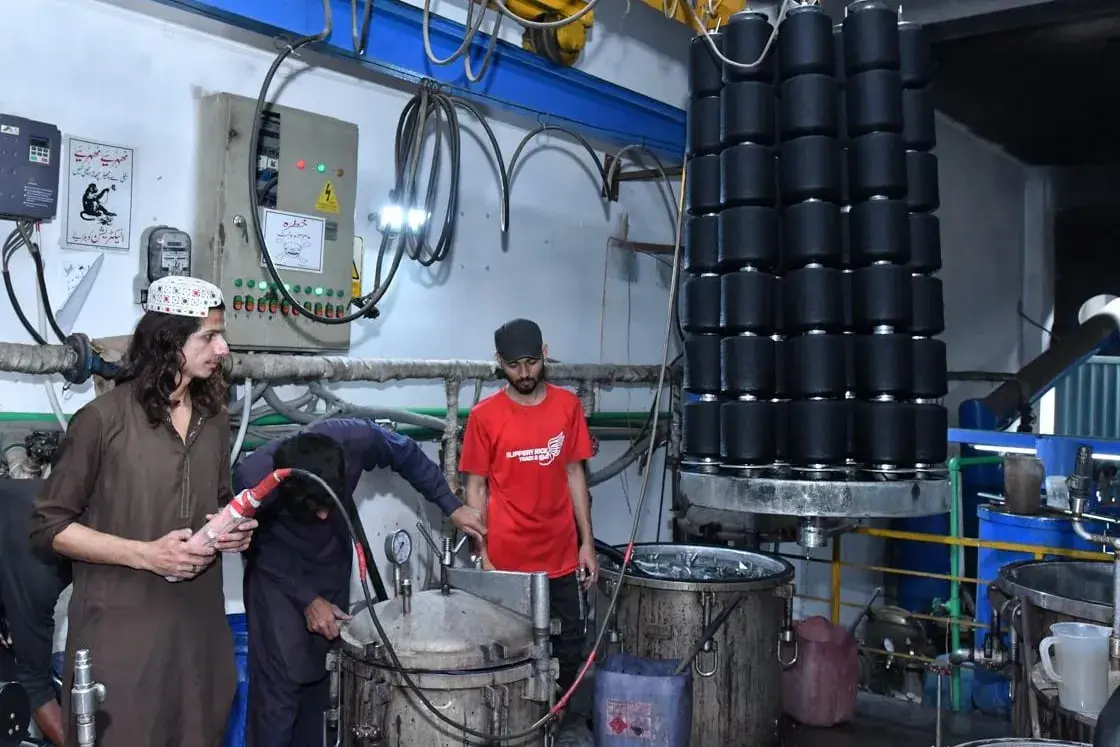
Dye
Cotton, polyester and spun polyester, taken to your reference and held until you pass the dip.
Your reference · RustProcessMonthly output
Dyeing90,000kg
Process
One building, one payroll, one set of records. Nothing in this sequence is subcontracted, which is why a shade that was approved in the dye house is still right in the carton.
Pick a shade, then follow it down through the building, from yarn to carton.
Cotton, polyester and spun polyester, taken to your reference and held until you pass the dip.
Your reference · RustHigh speed automatic braiding — at this scale, the first in Pakistan. Belt and gallus woven to width on the same floor.
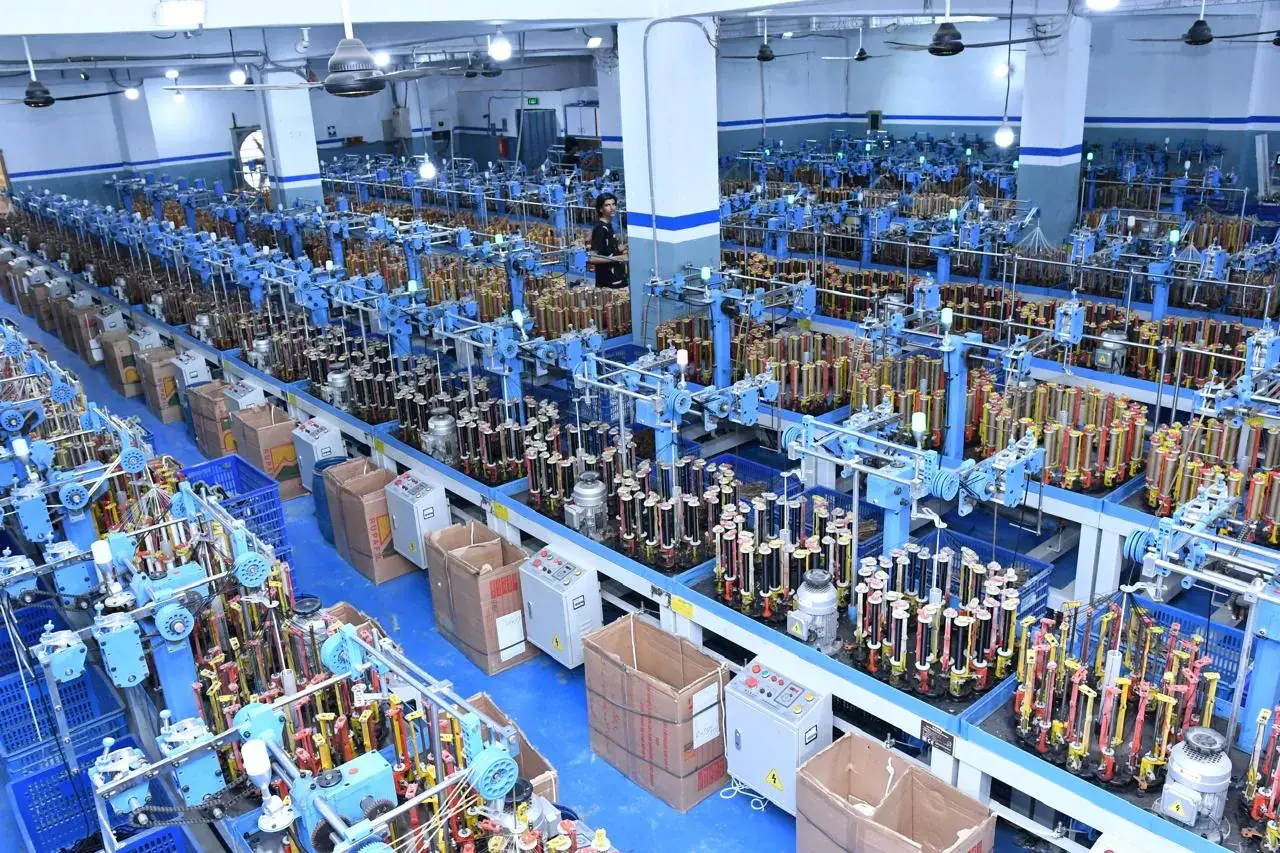
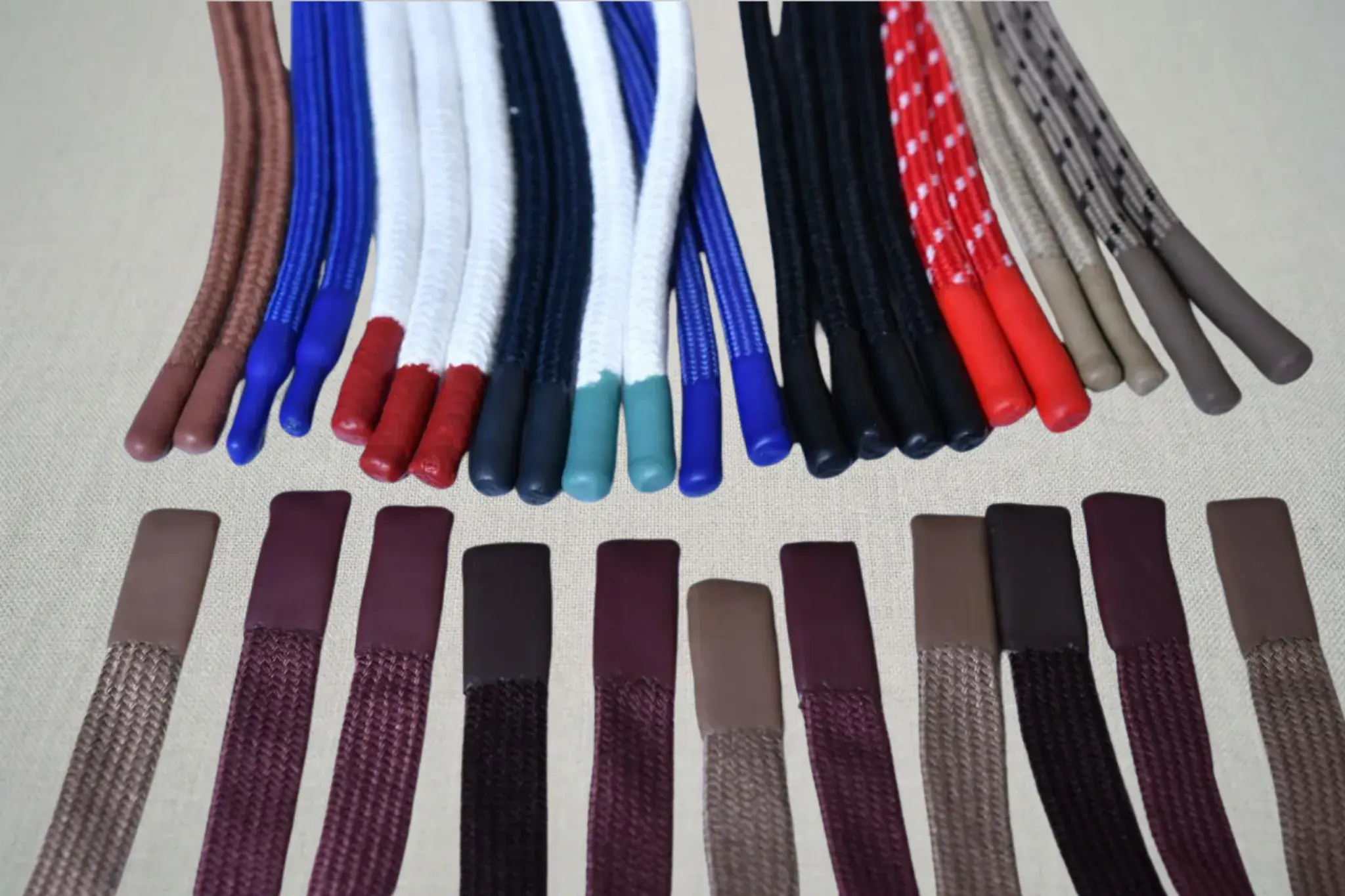
Silicon, PVC, metal, plastic and rubber tips on computerised machines. Eyelets set and plated.
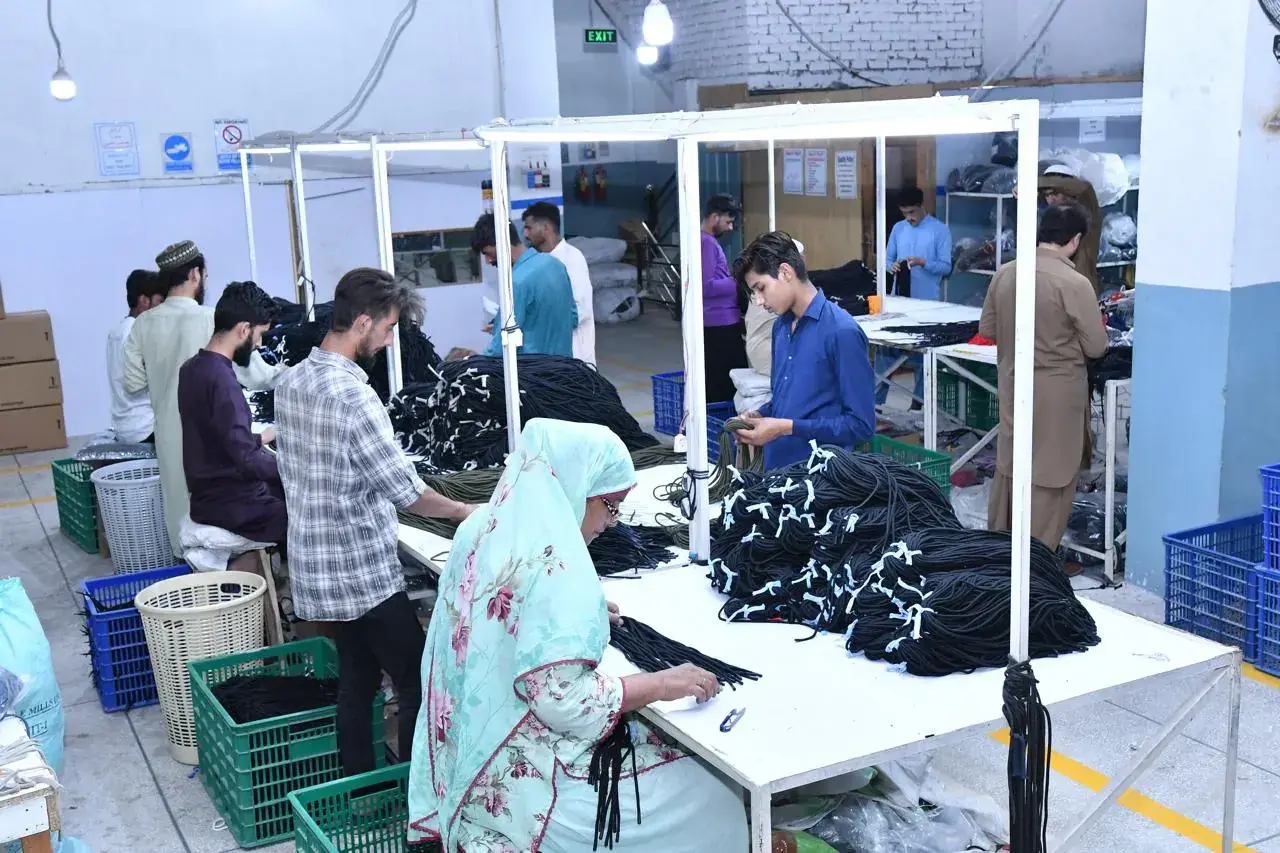
Checked piece by piece, not by sample, then counted into cartons with a packing list.
Shade matching
Dyeing is stage one, so a shade that is wrong is wrong in every stage after it. This is the sequence that stops that happening, and it is the same one on every order.
Illustration · screen colours are simulated
A TCX number, a physical swatch, or a piece of previous production. A screen grab is not a reference.
In our own dye house, on site. 90,000 kg a month of capacity, so your dip is not queued behind a bulk run.
D65 in a lighting cabinet, cross checked under TL84 and incandescent. Metamerism is caught here, not on your floor.
The approved swatch is retained here, so a repeat is matched to the same physical standard, not to a memory.
Capacity
Every figure below is monthly output for the process beside it. Where a line says Pending, the number has not been confirmed and is deliberately not estimated.
Each certified by an independent body. Ask for any certificate and we send it.
Request a certificate ISO 9001:2015Quality managementVerify
 OEKO-TEX® 100Harmful substancesVerify
 GRSRecycled standardVerify
 Higg FEMEnvironmental moduleRequest
 Higg FSLMSocial and labourRequest
Send a specification, a shade reference, or a photograph of the trim you are replacing. We will tell you what we can run and by when.
A.R Jadoon Garments Accessories
Typically replies within a day